
Under-construction shops in Rawalpindi typically cost 10-30% less than the same unit after handover, because developers price early to fund construction and reward buyers who commit before the risk clears. That price gap becomes your built-in return once the project completes.
If you’re comparing under-construction shops in Rawalpindi against ready-to-move options, the price difference is the first thing you’ll notice. Developers sell early-stage units at a discount because they need capital to keep building, and early buyers take on more uncertainty than someone who walks into a finished shop and pays full price.
This guide breaks down how early pricing works, what returns to expect, the risks to check first, and why Sardar’s Mall is a strong retail investment opportunity.
What Buying Under Construction Actually Means for a Shop Buyer
Buying under construction means you’re purchasing a shop before the building is finished, based on floor plans, a payment schedule, and the developer’s construction progress rather than a completed unit you can walk into today.
Most developers in Rawalpindi and Islamabad structure these sales the same way. You book a unit with a down payment, usually a percentage of the total price, and pay the balance in installments tied to construction milestones. You don’t get possession until the shop is complete, once the surrounding floors are complete and handed over.
This differs from buying a plot. An under-construction shop comes with a specific unit number, floor, size, and a project completion date. That makes it possible to evaluate the investment properly instead of guessing.
Why Early-Stage Prices Run Lower Than Post-Completion Prices
Early-stage commercial projects are usually priced lower because developers want buyers to invest while construction is still underway. The money collected from early bookings helps fund construction, while buyers get a lower entry price in return for taking some project risk.
In simple terms, the earlier you buy, the lower the price can be.
How do payment plans help investors? Most under-construction commercial projects offer a structured payment plan. You may pay a booking amount first and then make installments linked to specific dates or construction stages.
For example:
- Booking: Initial amount to reserve the shop
- Construction stage: Installments as work progresses
- Finishing stage: Further payments as the building approaches completion
- Possession: Final payment before the unit is handed over
For investors, the main advantage is simple: buying early can help you secure a lower price and benefit from future price increases as the project moves toward completion.
The Real Return Potential: Capital Appreciation Plus Rental Income
The return on an under-construction shop comes from two sources: the price gap between your booking rate and the completed-project rate, and rental income once the shop is operational.
Commercial property in Pakistan typically delivers gross rental yields between 6 and 10 percent, with net yields settling one to two points lower after maintenance and management costs. That’s meaningfully higher than most residential rental yields, which is one reason retail and office space attracts serious investors rather than end-users alone.
Capital appreciation works alongside that rental income. If you book a shop at an early-stage price and the project appreciates 20% by handover, that gain exists before you’ve collected a single rupee in rent. Add rental income once tenants move in, and the combined return often outperforms buying the same shop after completion.
Here’s a simple way to see the two return streams:
| Return Type | When It Happens | What Drives It |
| Capital appreciation | Between booking and handover | Price gap between early and post-completion rates |
| Rental income | After the shop is operational and leased | Location, footfall, and tenant demand |
Location does most of the work in determining how strong both numbers turn out. A shop in a high-footfall, mixed-use development attracts tenants faster and holds its value better than one in an isolated commercial strip.
For a deeper look at how shop pricing and returns compare across Rawalpindi, our shop investment guide breaks down current rates by floor and size.
Risks to Understand Before You Book and How to Manage Them
The main risk with under-construction shops is delay or non-completion, and you manage it by checking the developer’s approvals, track record, and construction progress before you pay anything.
Unlike a ready shop, you can’t inspect the finished product before buying. You’re trusting that the developer will deliver what’s on the floor plan, on roughly the timeline promised. That trust needs to be backed by verification, not assumption.
Before booking, confirm these points directly:
- Regulatory approval. Check that the project has RDA approval, not just a No Objection Certificate in progress.
- Developer history. Look at whether the developer has delivered previous projects on time, and visit one if possible.
- Construction progress. Ask for recent site photos or visit in person rather than relying only on renders.
- Payment structure. Confirm installments are tied to verifiable construction milestones, not arbitrary dates.
Under Construction vs. Ready-to-Move Shops: Which Fits Your Goals
The right choice depends on your timeline and risk tolerance: under-construction shops suit investors focused on maximizing long-term returns. Ready-to-move shops suit those who want immediate rental income with no construction risk.
If you need rental income starting now, or you’re an end-user planning to run your own business from the shop immediately, a ready-to-move unit removes the waiting period entirely. You pay more, but you know exactly what you’re getting and when.
If your priority is maximizing total return and you can wait through the construction period, buying early gives you the lower entry price and the full appreciation curve. This works best for investors who don’t need immediate cash flow and are comfortable holding the asset through completion.
Why Sardar’s Mall Is a Strong Fit for Early Shop Investment in Rawalpindi
Sardar’s Mall fits the early-investment case well because it combines a mixed-use structure, flexible unit options, and a defined construction timeline in one of Rawalpindi’s higher-footfall corridors.
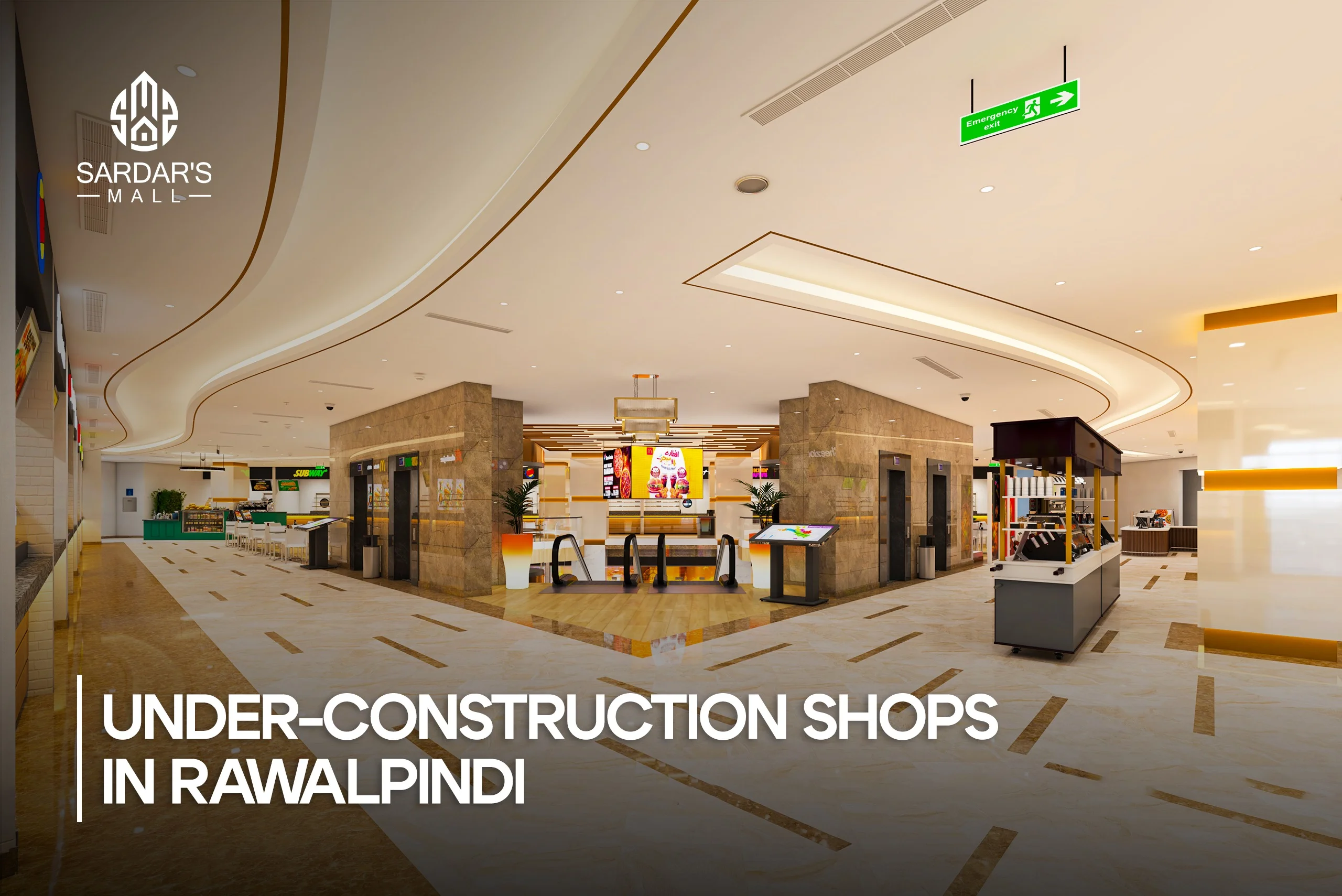
The project brings retail, a food court, offices, and residential apartments into a single development. That mix creates built-in footfall for ground-floor and upper-floor shops alike, since office staff, residents, and food court visitors all pass through the same retail corridors daily.
1st & 2nd Floors
Retail shops occupy the Ground, 1st, and 2nd floors, positioning early buyers close to the building’s main traffic flow. Shops on these floors benefit directly from footfall generated by the food court above and the office and residential floors that follow.
Flexible Retail Unit Sizes
Unit sizes are structured to suit different budgets and business types, from smaller boutique-format shops to larger retail spaces. You can match your investment size to your goals, whether that’s a single small unit for rental income or a larger space for a specific retail concept.
Brand & Boutique Shops
The mall is designed to house a mix of established brands and independent boutique retailers side by side. That combination tends to draw a wider range of shoppers than a single-format retail strip, which supports steadier footfall and tenant demand over time.
Modern Designed Finishes & Layouts
Units come with contemporary layouts and finishes designed around current retail standards, including sightlines, corridor width, and shopfront visibility. Buying early means you’re entering at pre-completion pricing for a finished product built to these standards, not an older structure retrofitted for retail use.
If you’re weighing a shop against a residential apartment at Sardar’s Mall, our shops and apartments investment comparison walks through how the two asset types differ in terms of value and risk.
How to Evaluate an Under-Construction Shop Before You Commit
Evaluate an under-construction shop by checking the developer’s approvals, the payment plan structure, the completion timeline, and the shop’s specific location within the project, in that order.
Start with approvals and developer history, since that’s your protection against the biggest risk: non-delivery. Once that’s confirmed, move to the commercial details.
- Review the full payment schedule. Know exactly what’s due at each construction milestone before you book.
- Confirm the completion date. Ask for the current projected timeline, not the original launch-date estimate.
- Check the shop’s exact location within the project. A unit near the main entrance or food court will typically outperform one in a low-traffic corner, even within the same building.
- Ask about resale and lease terms. Understand any restrictions on subletting or reselling before handover.
- Compare the price against similar under-construction shops nearby. This tells you whether the discount you’re being offered is genuinely competitive.
A shop that checks all five of these boxes gives you a much clearer picture of what you’re actually buying, beyond the floor plan and the price tag.
Key Takeaways
Buying an under-construction shop in Rawalpindi means accepting a construction timeline in exchange for a lower entry price and a longer window for appreciation. The math works in your favor when the developer is verified, the payment plan is tied to real construction milestones, and the location has genuine footfall potential. Sardar’s Mall offers each of these elements together, which is why early bookings continue to draw serious investors rather than speculative buyers.
If you’re ready to look at current availability and pricing, get in touch to discuss shop options with our team at Sardar’s Mall that fit your budget and timeline.
Frequently Asked Questions
It can be safe if you verify the developer’s approvals, track record, and current construction progress before booking. The main risk is delay or non-completion, which proper due diligence significantly reduces. Avoid projects that can’t show verifiable regulatory approval or recent site progress.
Discounts of roughly 10 to 30 percent below post-completion pricing are common for early-stage bookings. The exact gap depends on how early you book relative to the project’s completion date and how much of the inventory has already sold. Later-stage units in the same project usually cost more than early ones.
Confirm the developer’s regulatory approvals, review their past projects, and check the payment plan tied to actual construction milestones. Also verify the shop’s specific location within the building, since floor and position affect footfall and future returns.
Timelines vary by project size and scope, but most mixed-use mall developments in Rawalpindi take several years from launch to full handover. Ask the developer for their current projected completion date, since timelines can shift during construction.
No. Rental income starts only after the shop is complete, handed over, and leased to a tenant. Until then, your return exists only as the price gap between your booking rate and the shop’s value as construction progresses.